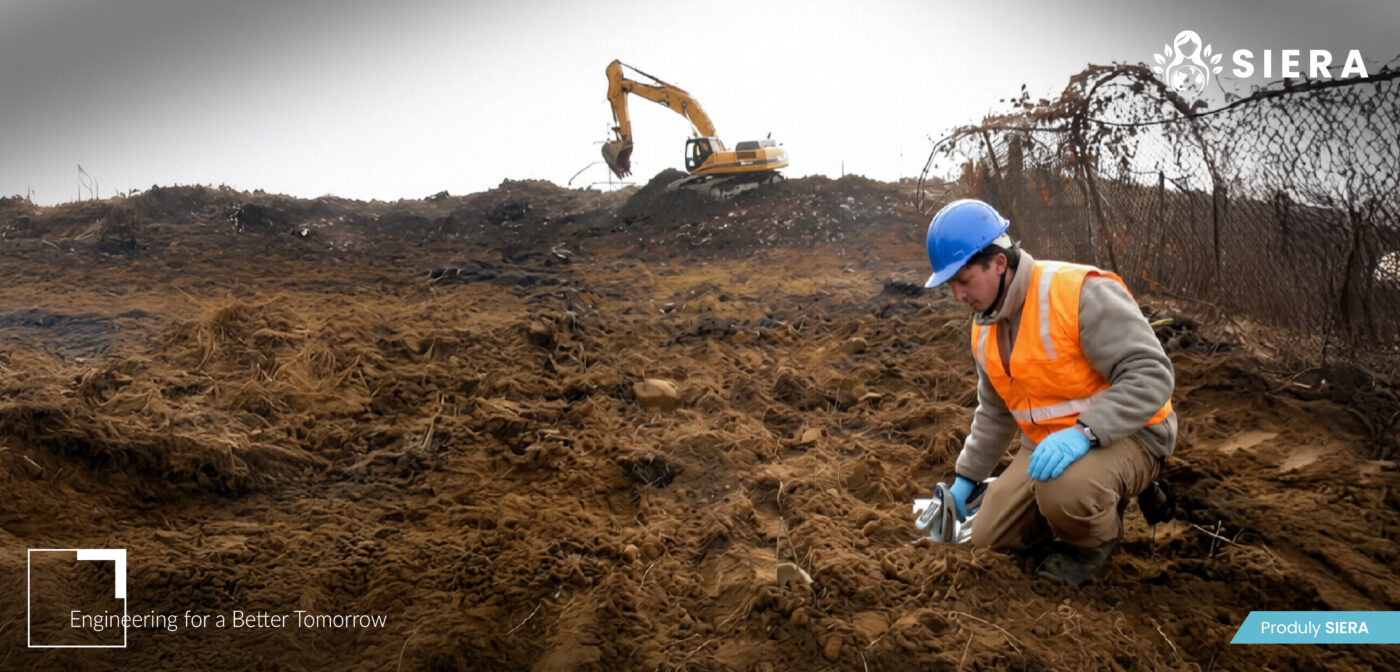
Contaminated land represents one of Europe’s most pressing ,and often underestimated, environmental challenges. Decades of industrial activity, improper waste disposal, mining operations, and urban expansion have left millions of sites affected by hazardous waste, heavy metals, hydrocarbons, and persistent organic pollutants. These contaminated sites pose serious risks to ecosystems, human health, and long-term economic growth, while also creating complex regulatory and financial liabilities for landowners, developers, and public authorities.
As sustainability expectations and regulatory frameworks continue to evolve, remediation is no longer just a technical necessity—it is becoming a strategic lever for sustainable development, risk mitigation, and value creation.
SIERA is a European alliance of leading environmental engineering and sustainability experts committed to addressing complex challenges across infrastructure, remediation, energy, and the built environment. Through its network of SIERA member companies, SIERA combines multidisciplinary expertise with innovation to deliver practical, future-ready solutions aligned with evolving regulatory and ESG requirements. The SIERA Impact Webinar Series, delivered by SIERA Academy, brings together experts of the SIERA Alliance to share insights on critical environmental and engineering topics, bridging regulation, technology, and real-world application. Designed for decision-makers, practitioners, and sustainability leaders, the webinars provide actionable knowledge, case-driven perspectives, and forward-looking strategies—supporting SIERA’s mission of Engineering For A Better Tomorrow.
Regulatory Pressure and the Role of CSRD & ESRS
Across the European Union, environmental accountability is tightening. The Corporate Sustainability Reporting Directive (CSRD) and the European Sustainability Reporting Standards (ESRS) are fundamentally reshaping how organizations identify, manage, and disclose environmental risks, including soil and groundwater contamination.
Under these frameworks, companies are expected to:
- Assess and disclose environmental liabilities and legacy pollution
- Demonstrate robust risk management and remediation strategies
- Align land-use decisions with long-term sustainability goals
Failure to act can result not only in regulatory non-compliance, but also in reputational damage, financial penalties, delayed development projects, and reduced asset value. Proactive remediation, on the other hand, supports transparent reporting, strengthens ESG performance, and builds stakeholder trust.
Innovative Remediation Technologies in Focus
In the SIERA Academy Impact Series webinar on Remediating Contaminated Land, experts of the SIERA Alliance explore how advanced engineering solutions are transforming the remediation landscape. Moving beyond traditional “dig-and-dump” approaches, modern remediation strategies are increasingly efficient, targeted, and sustainable.
Key technologies discussed include:
- In-situ chemical oxidation (ISCO): Treating contaminants directly in the ground, reducing soil disturbance and project timelines
- Ex-situ soil treatment: Controlled treatment methods that enable soil recovery and reuse
- AI-enabled compliance and monitoring tools: Supporting data-driven decision-making, regulatory reporting, and long-term site management
These approaches not only reduce environmental and health risks but also optimize costs and accelerate site redevelopment.
From Liability to Opportunity: Real-World Case Studies
One of the strongest messages from the webinar is that remediation is not merely about risk reduction—it is about unlocking potential. Through real-world case studies, experts demonstrate how contaminated sites can be successfully transformed into productive land uses, including residential developments, renewable energy projects, and green infrastructure.
Effective remediation delivers measurable benefits:
- Restoration of soil and groundwater quality
- Improved biodiversity and ecosystem resilience
- Increased land value and investment attractiveness
- Faster permitting and smoother stakeholder engagement
When integrated early into planning and sustainability strategies, remediation becomes a catalyst for long-term environmental and economic value.
Remediation as a Strategic Advantage
Organizations that approach contaminated land proactively are better positioned to navigate regulatory complexity, meet ESG expectations, and future-proof their assets. Rather than viewing remediation as a regulatory burden, forward-looking companies recognize it as a strategic investment in resilience, sustainability, and growth.
The SIERA Academy Impact Series provides a platform where technical expertise, regulatory insight, and practical experience come together—empowering decision-makers to move from compliance-driven action to value-driven strategy.
Ready to turn contaminated land into a sustainable opportunity?
Join the SIERA Academy Impact Series webinar on Remediating Contaminated Land and gain expert insights into regulatory compliance, innovative remediation technologies, and real-world success stories from across Europe.
Register now and take the next step toward responsible land redevelopment.
Engineering For A Better Tomorrow.