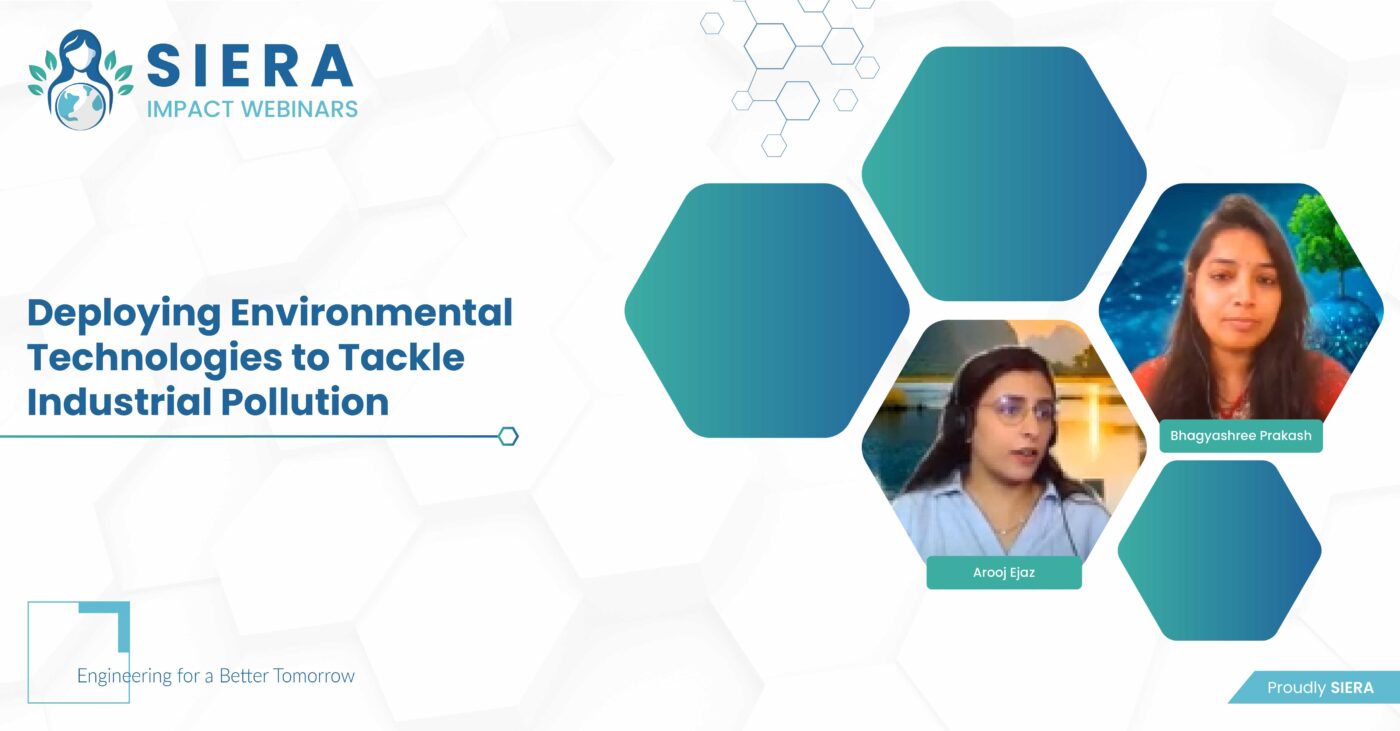
Industrial pollution is evolving faster than legacy controls.
From PFAS and pharmaceutical residues in wastewater to NOx, SOx, particulate matter (PM), and VOC spikes in the air, the risk profile for industrial operations now spans compliance, community trust, and competitiveness. This post distills key insights from the SIERA Academy Impact Series Webinar on deploying environmental technologies that make operations cleaner, leaner, and future ready.
Key Environmental Challenges:
- Wastewater Contaminants (PFAS and Pharmaceutical Residues)
Industrial wastewater is increasingly contaminated with persistent chemicals like PFAS and pharmaceutical residues, which are difficult to treat using conventional systems. These emerging pollutants push wastewater plants into a reactive mode, creating operational and reputational risks. The result is heightened pressure on facilities to comply with stricter discharge limits while protecting water quality. - Air Emissions (NOx, SOx, PM, VOCs)
Industrial air emissions, including nitrous oxide (NOx), sulfur oxides (SOx), particulate matter (PM), and volatile organic compounds (VOCs), contribute significantly to air pollution. Regulatory agencies and communities demand reliable, predictable performance, with continuous monitoring to prevent spikes that could result in penalties or community opposition. - Legacy Soil & Groundwater Contamination
Historically, industrial sites often discharged hazardous materials into the environment, leaving behind legacy soil and groundwater contamination. These contaminants, including hydrocarbons, solvents, and heavy metals, continue to complicate site redevelopment and regulatory approval processes. Addressing these liabilities through proactive remediation can unlock valuable sites for future use. - Resource Intensity (Energy and Materials Waste)
Inefficient industrial processes waste significant amounts of water, energy, and raw materials. In turn, this leads to excessive emissions, resource depletion, and higher operating costs. Investors are now emphasizing the importance of circular economy models, driving the need for more sustainable practices that reduce waste and optimize resource usage.
Why Industrial Pollution Demands New Tools
Regulatory expectations and community scrutiny are rising together. The following pressure points are where most facilities feel the squeeze—and where modern technology delivers outsized gains.
Four pressure points shaping investment decisions:
- Wastewater & discharge limits: Variable production, aging pre-treatment systems, and emerging contaminants push plants into reactive “firefighting” mode and heighten reputational risk.
- Air emissions & community impact: Stack emissions (NOx, SOx, PM, VOCs) can create unpredictable spikes; regulators and neighbors now expect steady, verifiable performance.
- Legacy soil & groundwater: Historical releases depress asset value, complicate permitting, and stall site redevelopment until remediation is mapped and funded.
- Resource intensity: Linear, resource-heavy processes waste energy and materials; investors are rewarding circularity and lifecycle improvements.
EU Frameworks that Set the Bar
Europe’s policy stack doesn’t just raise minimums; it points directly to the technologies and data disciplines industry must adopt. Use this as a blueprint for investment cases and governance.
EU Environmental Regulations for Industrial Pollution Control
- Industrial Emissions Directive (IED) – Sectoral emission limits and Best Available Techniques (BAT)
- Waste Framework Directive – Waste hierarchy; producer responsibility
- EU Taxonomy – Defines sustainable activities for finance access
- REACH – Controls hazardous substances; transparency
- Waste Shipment & Landfill Directives – Traceability; landfill restrictions
Opportunity Lens: Turn Compliance into Value
Compliance investments can do more than avoid penalties—they can lower OPEX, stabilize operations, and improve financing terms. Focus on these value pathways.
- Water security through intelligence – Smart sensors, digital dashboards, and targeted advanced treatment convert wastewater from liability to resource—supporting reuse and resilience.
- Integrated carbon–biodiversity–social impact – One system for impact data improves ratings, eligibility for sustainable finance, and community trust.
- Redevelopment via remediation – Proactive soil/groundwater remediation turns stranded sites into bankable platforms for growth.
- Circular advantage with lifecycle assessment (LCA) – Mapping hotspots unlocks energy recovery, material substitution, and cost reductions.
Five Solution Pillars You Can Deploy Now
These pillars are modular. Start where risk is highest or ROI is clearest, then integrate data flows across the plant for compounding benefits.
- Environmental Contamination Assessment (ECA) for wastewater
Continuous monitoring and intelligent sampling reveal true load profiles, enabling proactive control rather than emergency response. - Carbon Footprint + ESIA for air and community outcomes
Pair technical emission cuts with social accountability to strengthen the license to operate and align with sustainable finance criteria. - Legacy soil & groundwater assessment for redevelopment
A structured program de-risks permits, transactions, and future expansions by addressing historical contamination early. - Lifecycle Assessment (LCA) for cost and impact
“Cradle-to-grave” accounting of energy, water, materials, emissions, and waste to identify efficiency hotspots and guide strategic redesign. - Data platform for EU-aligned reporting and control
Centralize sustainability data to reduce reporting burden and increase operational insight.
Implementation Roadmap (90 days)
A focused plan builds momentum and credibility. Treat this as a starter template and adapt to your sector and permitting context.
- Days 0–30: Map permits, exceedance history, and stakeholder expectations; align on EU Taxonomy targets.
- Days 31–60: Deploy priority sensors and tie to dashboards/alerts.
- Days 61–90: Tune controls and connect to ESRS/CSRD disclosures via the data platform.
What “Good” Looks Like in 12 Months
Define success upfront so teams know what they’re building toward. These outcomes are realistic with disciplined execution:
- Compliance: Zero critical exceedances; verified BAT in place for IED-relevant lines.
- Water: ≥15% reduction in freshwater intake via reuse.
- Air: Continuous monitoring tied to preventive maintenance; measurable NOx/VOC reductions.
- Sites: Approved remediation plans for priority legacy areas.
- Data & Finance: ESRS-ready disclosures; clearer eligibility for sustainable financing under EU Taxonomy.
How SIERA Alliance Helps
The SIERA Alliance brings environmental engineering depth and digital tooling together to accelerate outcomes across portfolios.
- Expertise: Remediation planning, wastewater optimization, and air-emissions control aligned to BAT.
- Technology: A unified ESG/CSRD data platform with analytics that surface performance gaps early.
- ROI Focus: Circularity and efficiency measures that reduce OPEX, improve asset values, and strengthen green-finance narratives.
Resources & Next Steps
- Explore the SIERA Academy Impact Series for upcoming sessions.
- Review your top three environmental risks and pick one pilot line for a 90-day sprint.
- Book a consultation to triage wastewater, air, or legacy-site priorities with SIERA member companies.
- Join the EUTECH – powered by SIERA event calendar for hands-on workshops and webinars.